 Gair, Gair, Conason, Rubinowitz, Bloom, Hershenhorn, Steigman & Mackauf Home
Do I Have a Personal Injury Case in New York?
After an accident, a common question is whether you have a personal injury case. The answer depends on more than whether you were hurt. A claim generally requires a legal basis for holding another person, business, medical provider or other party responsible for the harm.
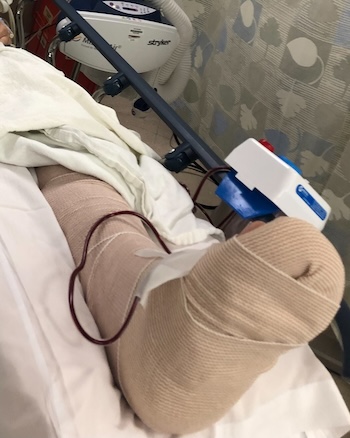 The key questions usually concern legal duty, wrongful conduct, causation and damages. Evidence, filing deadlines, the identity of the responsible parties and the type of accident also affect the analysis.
These questions often cannot be answered reliably from the injury or accident label alone. The sections below explain what to examine and when a closer legal review can help.
A potential claim usually turns on whether another party had a legal duty, violated it, and caused a legally recoverable injury. A personal injury lawyer must also consider the available evidence, applicable deadlines, and potential sources of recovery.
Responsibility may initially seem unclear until video, records, witness accounts or expert analysis show what happened. A weakness in one part of the claim calls for investigation; it does not necessarily end the inquiry.
Many claims require proof that a person or entity owed a duty of care, breached that duty, and caused injury. The duty depends on the circumstances: a driver must operate a vehicle carefully; a property owner may need to address a dangerous condition; a medical professional must meet the applicable standard of care.
Some claims arise under other legal theories, including certain construction and product liability laws. An accident or injury alone does not establish that another party is legally responsible.
The most visible participant in an accident may not be the only responsible party. Depending on the facts, a claim may involve a driver and vehicle owner; a property owner and manager; a contractor and subcontractor; a hospital and provider; or a manufacturer and seller.
Identifying all potentially responsible parties matters particularly in serious cases because each may have different duties, evidence and insurance coverage.
You need not identify every responsible party before speaking with an attorney. The investigation may involve photographs, surveillance, witness accounts, vehicle data, contracts, maintenance or inspection records, medical records and expert analysis. Evidence may reveal a party whose role was not apparent at the scene.
Partial fault does not necessarily defeat a New York personal injury claim. Under CPLR § 1411, a claimant's fault generally reduces recoverable damages in proportion to that fault. However, different comparative-fault rules now apply to certain motor vehicle personal injury claims subject to Article 51 of the New York Insurance Law, and in some circumstances a claimant's degree of fault can bar recovery.
Do not assume a police report or an insurer's assessment fully resolves the allocation of fault. The conduct of everyone involved and the law governing the specific claim must be examined.
No single injury threshold applies to every type of claim, although a claim requires legally recoverable harm. The extent of injury affects damages and whether pursuing litigation is practical.
In motor vehicle cases, New York's no-fault rules and statutory "serious injury" threshold may limit when a person can recover pain and suffering damages. Other types of claims follow different rules. Some injuries become clearer only after symptoms progress or diagnostic testing is completed.
An injury that initially seems temporary may later require surgery, rehabilitation or long-term care. Medical records can document when symptoms began, how they progressed, the treatment required, and the effect on work and daily life.
The question is whether the factual and medical evidence connects that progression to the accident.
A prior condition does not automatically prevent recovery for an aggravation or acceleration caused by an accident. The evaluation may require comparison of earlier records and imaging with post-accident findings and an assessment by treating providers or medical experts.
Proof of wrongdoing alone is not enough: the conduct must have caused the injury for which damages are sought. Causation can be contested when there was a pre-existing condition, delayed symptoms, multiple accidents, or several potentially responsible parties.
For example, showing that a property had a dangerous condition does not establish liability unless the condition was connected to the injury.
An independent eyewitness is helpful but not required in every case. Photographs, physical damage, surveillance, electronic data, medical records, statements made after the event and expert reconstruction can help establish what happened. The absence of a witness changes the evidentiary analysis; it does not automatically eliminate the claim.
A claim can be proved without video. Where video may exist, prompt action matters because recordings can be overwritten. Vehicles, equipment, products and accident locations can also be repaired or altered before they are examined.
Recoverable losses may include medical care, future treatment, lost income, reduced earning capacity, rehabilitation, attendant care, pain and suffering, disfigurement and loss of independence, depending on the case.
Whether a claim exists and what it may be worth are different questions. After considering liability and causation, the full extent of past and future damages must be assessed.
Claims may arise from vehicle collisions, bicycle crashes, pedestrian accidents, transit incidents, construction accidents,falls, defective products, medical malpractice, nursing home negligence and certain workplace incidents involving third parties.
The governing law varies. Construction claims may involve New York Labor Law provisions; malpractice has different requirements; and public-entity claims may involve special notices and deadlines.
Possibly. Workers' compensation benefits and a lawsuit against a responsible third party are different remedies. Depending on the accident, a third-party claim may involve a property owner, contractor, driver or equipment manufacturer. Construction claims may also involve the New York Labor Law.
Gair, Gair, Conason, Rubinowitz, Bloom, Hershenhorn, Steigman & Mackauf does not handle workers' compensation claims, but represents seriously injured construction workers in appropriate third-party personal injury and construction cases.
Potentially, but special procedures can apply. When General Municipal Law § 50-e requires a Notice of Claim for a tort claim against a public corporation, it generally must be served within 90 days after the claim arises, subject to statutory rules and exceptions.
The responsible entity must be identified accurately; public authorities and agencies can have different requirements. An incident involving a public vehicle, property or transit system should be reviewed promptly.
Many New York personal injury actions must be commenced within three years under CPLR § 214, but that is not a universal deadline. Medical malpractice generally has a two-year-and-six-month period under CPLR § 214-a, with important exceptions and rules for continuous treatment.
Wrongful death, claims against public entities, claims involving minors and other categories can have different rules. Notice deadlines may come before the deadline to file suit. The applicable dates should be checked for the specific claim.
An insurer's denial or low offer does not determine the legal merits. Disputes may concern fault, notice of a dangerous condition, whether the accident caused an injury, whether treatment was necessary, the extent of damages or available insurance. Each issue must be evaluated under the governing law and evidence.
A police report is relevant but may reflect accounts from people at the scene rather than an officer's firsthand observations. Video, photographs, witness statements, vehicle data, roadway conditions and reconstruction may provide additional context. Liability should be evaluated from the complete record.
A delay in emergency care does not automatically eliminate a claim. Symptoms sometimes become apparent later. A gap in treatment can, however, lead to questions about causation or severity. Seek medical guidance for symptoms and maintain accurate records of when they began and how they changed.
Depending on the incident, useful materials may include scene and injury photographs, witness contact details, police and incident reports, treatment and imaging records, insurance and employment information, maintenance or construction records, contracts, product data and electronic communications.
Early review is valuable when a recording may be overwritten or a dangerous condition may be changed.
You need not wait until treatment is finished. An early legal review can identify defendants, preserve evidence, check insurance coverage and determine whether a Notice of Claim or another short deadline applies. The eventual case value may remain uncertain even when immediate investigative steps are clear.
A meaningful evaluation examines how the injury occurred, which duties and laws apply, who may be responsible, the evidence that exists or can be obtained, whether the conduct caused the injury, the past and likely future damages, deadlines and available sources of recovery.
For serious injuries, medical, engineering, accident reconstruction, vocational and economic experts may be needed to answer particular questions.
The answer depends on the specific accident, the conduct of the potentially responsible parties, the medical evidence, proof of causation and the law that applies. Partial fault, a prior condition, no eyewitness or an insurer's denial does not by itself settle the question. Nor does an injury alone establish that someone else is liable.
Gair, Gair, Conason, Rubinowitz, Bloom, Hershenhorn, Steigman & Mackauf represents people with serious and catastrophic injuries throughout New York. Our attorneys investigate how an accident occurred, identify potentially responsible parties and assess the available legal options.
If you or a family member suffered a serious injury, call 212-943-1090 or contact us online for a free consultation.


