 Gair, Gair, Conason, Rubinowitz, Bloom, Hershenhorn, Steigman & Mackauf Home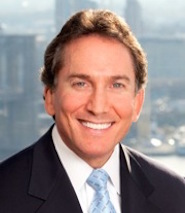
Ben B. Rubinowitz
Managing Partner

 It is an honor to be named Best Lawyers "Lawyer Of The Year." But it is an incredibly rare honor to be named Best Lawyers "Lawyer Of The Year" six times. Ben Rubinowitz is one of those rare lawyers who never stops fighting for his client's plight. Perhaps this is why Ben has been repeatedly recognized for his skills and results. This year, Ben Rubinowitz was once again ranked #1 on the Super Lawyers list, marking his third consecutive year as the top-rated attorney among all lawyers and all practice areas in the New York Metro area. He was also ranked among the Top 5 Personal Injury attorneys in the New York Metro area in Super Lawyers’ newly introduced practice area rankings. There is a reason for this recognition. Ben has devoted his Professional Career to helping those in need. His results speak volumes. But what truly sets Ben apart from other attorneys is that he really cares about his clients. As one of his client's recently put it: "There is no lawyer who will work harder for you. This guy really cares. He truly puts his client's needs first. If Ben agrees to take your case consider yourself lucky. You will never have anyone devote as much time, care and effort to your cause."
 THE BEST LAWYERS IN AMERICA
SUPER LAWYERS #1 NEW YORK – METRO 2024 AND 2025
BEST LAWYER'S "LAWYER OF THE YEAR" 2024 (personal injury and product liability) 2018, 2017, 2016 and 2013
FORBES ADVISOR "BEST PERSONAL INJURY LAWYERS" 2023, 2024, 2025
Jump to: Background | Charitable Giving | Publications | Cases of Note | Recent Lectures | Client Reviews | Recent News | Masters Program | Trial Demonstrations
J.D., Hofstra University, 1981
B.A., Boston University, 1978
magna cum laude, Phi Beta Kappa
U.S. District Court, Eastern & Southern Districts of New York, 1982
The Inner Circle of Advocates
Member (Top 100 Plaintiff’s Lawyers in the Country)
American Board of Trial Advocates
(Past President of the New York City Chapter)
International Society of Barristers
Fellow
The International Academy of Trial Lawyers
Fellow
The American Trial Lawyers Association
New York State Trial Lawyers Association
Dean
New York State Bar Association
New York County Lawyers Association
Mayor's Advisory Committee On The Judiciary
Member Since: 2019
Throughout his 30-year legal career, Ben Rubinowitz has made his mark as a leading trial lawyer combining hard work and dedication with his remarkable courtroom skills and presence. Mr. Rubinowitz began his career as a prosecutor, where he honed the trial skills that would become his hallmark. From there, he began serving as a trial lawyer representing severely injured plaintiffs in personal injury cases, eventually joining GGCRBHS&M in 1989. For the past 16 years Mr. Rubinowitz was featured in New York Magazines' article on "Best Lawyers in New York". For the past 2 years Ben has been recognized in the New York Times as one of the "Top 10" lawyers in the New York Metro area, as evaluated by New York Super Lawyers. Ben was honored by being elected to be a member of the prestigious Inner Circle of Advocates. The Inner Circle of Advocates is limited to 100 members considered among the best plaintiffs attorneys in the United States and also to be "lawyers of excellent character and integrity."
Ben's meticulous approach to the preparation and trial of cases has produced 29 verdicts and over 180 settlements in excess of one million dollars in cases arising out of car accidents, premises accidents, construction accidents, medical malpractice, civil rights violations and products liability. Mr. Rubinowitz has a thorough grasp of the nuances of complex issues. This, coupled with his ability to translate complicated information into clear terms for a jury, has left an indelible impression on all those who have witnessed him in action--including even defendants' medical experts that he has cross-examined. In addition to his skills as a trial lawyer, Mr. Rubinowitz has successfully argued appellate cases before the Appellate Division and the highest court in the State of New York, the Court of Appeals.
Mr. Rubinowitz's experience and legal acumen is also sought out outside of the courtroom. He has appeared as a legal expert on Court TV and co-authors a regular column in the NY Law Journal on the subject of trial advocacy. His successes as a trial lawyer and expertise in his field have earned him national recognition as a trial advocacy teacher both to attorneys and to law students. Mr. Rubinowitz has lectured, chaired, and participated in seminars and programs at Harvard, Yale, Emory, Fordham, Hofstra, St. John's, Pace and Cardozo law schools, as well as more than 500 continuing legal education programs throughout the country and internationally. In recognition of his trial skills, Mr. Rubinowitz has been asked by the National Institute for Trial Advocacy to serve as a national and regional team leader and thereafter, served as Chair of the National Institute for Trial Advocacy.
More recently, Mr. Rubinowitz was asked by the Duke University School of Medicine and Columbia University, College of Physicians and Surgeons to lecture physicians about Medical Malpractice at the American Urologic Association, and Mt. Sinai Hospital, NYU School of Medicine and at the Mayo Clinic.
In recognition of his experience and talent Ben has been asked to lecture to Judges at the Judicial Institute and has represented Judges before the Judicial Conduct Commission.
Among Ben's recent Court victories are: a landmark verdict holding Metro-North primarily liable for the Valhalla train crash,the deadliest accident in Metro-North - which ultimately resulted in a settlement exceeding $182 million for the families of five passengers killed and dozens of others injured, a $120 Million Verdict in a Medical Malpractice case against Westchetser County Medical Center, this record-setting verdict is the largest ever in Westchester County, a $59,200,000 verdict for a former high school student disfigured by a chemistry experiment, a $41,500,000 Verdict for the family of a city sanitation worker fatally struck by a street sweeper, this is one of the largest wrongful death award in Queens County; a $71,000,000 Verdict in a car accident case in which his client suffered Spinal Cord Injuries, this is the largest Verdict in the Country for this type of injury; a $27,500,000 verdict obtained in New York Supreme Court for a bus accident in which a woman, who was struck by a bus while crossing the street, lost her leg, this is the largest award in New York State history for this type of injury; a $26,000,000 settlement in a wrongful death claim by the husband of a woman struck and killed by a truck, this is one of the largest wrongful death awards in the country for the death of one person; a $17,250,000 verdict in a medical malpractice case in which a man was rendered partially incontinent as a result of a doctor committing medical malpractice, this case was tried to verdict in Syracuse, New York and is one of the largest verdicts ever obtained in that county; an $11,400,000 verdict for the sexual abuse of two teenagers; a $10,000,000 settlement for a woman who was rendered blind as a result of being struck by a drunk driver. Ben successfully argued this case before the highest Court in the State, The New York Court of Appeals winning a 7 to 0 decision for his client (to see the legal argument click here). Ben later settled this case during trial in Nassau County Supreme Court; an $8,000,000 settlement during trial in Queens, New York for a woman who suffered brain damage as a result of anesthesiologic malpractice; an $8,000,000 settlement obtained during trial for a baby rendered brain damaged shortly after birth and an $8,000,000 settlement on behalf of a man who lost his wife as result of the reckless conduct of a man who was driving while intoxicated.
Charitable giving and community service is very important to Ben Rubinowitz. Ben Rubinowitz is proud of his support of medical and legal organizations, law schools and pro bono activities. In addition to the donation of his time, Ben has donated money to provide financial support to the following organizations.
- The Hagedorn Little Village School
This is a not for profit school that provides services for children with developmental disabilities including autism, speech delays, motor and visual impairments, cognitive delays and social and emotional deficits.
- Andean Health & Development
This is an organization that is building a much needed hospital in Santo Domingo. This organization strives to create sustainable health care in Latin America through education.
- The Leukemia & Lymphoma Society
The mission of the Leukemia and Lymphoma society is to cure Leukemia, Lymphoma, Hodgkin’s disease and myeloma, and improve the quality of life for those suffering with illness.
- The Innocence Project
A National litigation and public policy organization dedication to exonerating wrongfully convicted individuals through DNA testing and reforming the criminal justice system to prevent further injustice.
- The Melanoma Research Alliance
The Melanoma Research Alliance seeks to impact the lives of more than 70,000 Americans, through scientific research, who are newly diagnosed with melanoma each year.
- JALBCA, the JUDGES AND LAWYERS BREAST CANCER ALERT
JALBCA, the JUDGES AND LAWYERS BREAST CANCER ALERT, is an organization that mobilizes the New York City legal community to take action against breast cancer. Each year our firm is a proud sponsor of a free mammography Van to help those people who do not have insurance or are otherwise too poor to pay for preventative screening for breast cancer.
- National Institute for Trial Advocacy
Ben provides financial support for scholarships for lawyers who choose to work for indigent individuals and public service organizations.
- The Carol M. Baldwin Breast Cancer Research Fund
Our firm is a proud donor to the Carol Baldwin Breast Cancer Research Fund. The mission of the Baldwin Fund is to support both new and established research investigating the causes, prevention and treatment of Breast Cancer. To date, the Baldwin Fund has donated more than $4 Million to medical research at Stony Brook. Approximately 39,620 women are expected to die each year from breast cancer (American Cancer Society). Only lung cancer accounts for more cancer deaths in women. Our firm is actively involved in trying to prevent such deaths.
Ben Rubinowitz has been widely recognized as an Expert in his field. He co-authors a regular column with his good friend and colleague, Evan Torgan, entitled, "Trial Advocacy," for the New York Law Journal, the daily newspaper for attorneys in New York State. The column discusses state of the art techniques required for successful outcomes at trial. Many of the actual articles are posted on this site.
- The Bridge from Voir Dire to Final Argument: Using "Brutal Honesty", Personal Responsibility and Juror Commitment to Shape the Verdict, New York Law Journal, May 20 2026
- Winning The Collateral Source Hearing, New York Law Journal, February 4 2026
- Jury Selection: The Art of Turning Bias Into Cause, New York Law Journal, August 13 2025
- Expert Cross-Examination: Creating Maximum Mileage from an Expert's Mistakes, New York Law Journal, August 20, 2024
- Using Professional Ethics to Discredit Opposing Expert Witness Testimony, New York Law Journal, October 5 2023
- The Ethics of Trial Practice, New York Law Journal, October 25 2021
- Strategic Jury Selection, New York Law Journal, June 18 2021
- Trust and Reliance: A Powerful Theme for Cross, New York Law Journal, May 7 2021
- Cross-Examination: Exploring the Process That Leads to the Choice, New York Law Journal, December 30 2020
- Impeachment: Let's go to the Video Tape, New York Law Journal, November 4 2020
- Techniques for Cross-Examining an Expert Witness, New York Law Journal, October 3, 2019
- Creating a Winning Frame: From Cross to Final Argument, New York Law Journal, April 10 2019
- Cross Examination: Beyond Lead, Lead, Lead, New York Law Journal, September 19 2018
- Concurrent Surgery: In Whose Best Interest?, New York Law Journal, March 16 2018
- Confronting the Immigration Bias in Jury Selection, New York Law Journal, September 9 2017
- Exposing a Lie During Cross-Examination, New York Law Journal, July 14 2017
- Protecting Your Clients From Their Own Social Media, New York Law Journal, March 22 2017
- Confronting Difficult Issues in Jury Selection Head On, New York Law Journal, August 2016
- Use of Supporting Evidence With the IME Physician at Trial, New York Law Journal, April 25 2016
- Winning With Failures and Omissions, New York Law Journal, February 10 2016
- Trying Damages in the Wrongful Death Case of an Adult Child, New York Law Journal, November 18 2015
- Attacking the Electronic Medical Record, New York Law Journal, September 8 2015
- From Opening to Summation Making First Impression Count, New York Law Journal, June 5 2015
- Scaled Questions During Jury Selection, New York law Journal, March 23, 2015
- Cross-Examining the Mistaken Witness, New York Law Journal, December 15, 2014
- Wrongful Death: Voir Dire as a Bridge to Summation, New York Law Journal, October 27, 2014
- Videotaping IMEs: a Corollary to Defense Surveillance, New York Law Journal, August 26, 2014
- Making the Most of Omissions: When Critical Facts Are Left Unsaid, New York Law Journal, June 23, 2014
- Direct Examination of the Economist, New York Law Journal, May 19, 2014
- Case for the Rhetorical Question as a Summation Technique, New York Law Journal, February 24, 2014
- Exposing Expert Witness' Bias During Cross: Collateral Attack, New York Law Journal, December 23, 2013
- Turning the Table: Cross-Examining IME Doctor Using Video of Exam, New York Law Journal, October 28, 2013
- Summation: More than a Final Argument, New York Law Journal, August 26, 2013
- The Use of Video Depositions at Trial, New York Law Journal, July 15, 2013
- Preparing For and Defending Against the Collateral Attack, New York Law Journal, April 29, 2013
- Focusing on the Witness’ Answers and Asking Follow Up Questions, New York Law Journal, February 22, 2013
- Trying a Labor Law Case With a Sole Proximate Cause Defense, New York Law Journal, January 9, 2013
- Cross Examination: Comparison of Different Approaches, New York Law Journal, October 23, 2012
- Oratory Techniques for Effective Opening Statements and Summations, New York Law Journal, September 11, 2012
- Controlling Witnesses on Direct and Cross, New York Law Journal, June, 19, 2012
- Aggravation of a Pre-Existing Medical Condition, New York Law Journal, April 23, 2012
- Examining the All-Purpose Expert, New York Law Journal, December 29, 2011
- Proving Liability Through Injuries, New York Law Journal, October 28, 2011
- Depositions: An Important Tool for Trial, New York Law Journal, August 23, 2011
- "Good As Gold: Using Analogies and Short Stories In Summation," New York Law Journal, June 28, 2011
- "Dealing with Damages In Voir Dire and Summation," New York Law Journal, April 25, 2011
- "Using The Internet As A Tool For Cross Examination," New York Law Journal, February 28, 2011
- Common Mistakes on Direct Examination, December 28, 2010
- Proving Your Case Through Adverse Witnesses, November 1, 2010
- Preserving and Protecting the Trial Record, August 30, 2010
- The Adverse Direct Examination of a Defendant Doctor, July 6, 2010
- Cross Examination, Dealing With Changing Testimony: From Set Up to Knock Down, April 22, 2010
- Exposing Biased Testimony on Cross, February 23, 2010
- Control During Cross Examination: Stopping The Run Away Witness, November 19, 2009
- Dealing With Weaknesses and Maintaining Credibility, October 20, 2009
- Trial of A Soft - Tissue Knee Injury Case, August 27, 2009
- Rethinking The Chronological Presentation of Evidence, July 28, 2009
- Jury Selection: Dealing With Damages in Era of Tort Reform Trial Advocacy, December 23, 2008
- The Cross Examination of the Defense Economist, 10/31/08
- The Art of Jury Selection: Working With Challenges, 8/29/08
- Getting the Big Picture: using Exhibits Throughout a Trial, 7/31/08
- Prep is Key to Cross-Examining Medical Witness, 5/29/08
- Redirect Examination, 11/29/2007
- Proving Damages in a Wrongful Death Case, 10/23/2007
- Jury Selection: Time Constraints and Weaknesses in Cases, 8/29/2007
- Using Operative Terms From Jury Charge in Cross-Exam, 7/26/2007
- Authoritative Texts and Cross-Exam of Medical Experts, 6/7/2007
- Hypothetical Questions on Cross, 12/29/2006
- The Use of Hypothetical Questions as Weapons at Trial, 10/31/2006
- Common Mistakes and Simple Remedies, 9/21/2006
- Introduction of Exhibits in Civil Cases, 7/25/2006
- Continuing to Try Your Case After the Summations, 5/4/2006
- Compendium of Trial Advocacy Drills , by Robert Stein & Ben Rubinowitz, NITA, 2006
- Who's Up First? Issues Related to Order of Summation, 10/25/2005
- Impeachment With a Prior Inconsistent Statement, 1/6/06
- The Trial of a Soft Tissue Injury Motor Vehicle Case, 9/21/2005
- The Virtue of Patience: Setting Up Expert Witness on Cross-Exam, 7/27/05
- The Opening Statement in the Herniated Disc Case, 5/5/2005
- Medical Malpractice: Using Defendants' Evidence Against Them, 12/30/04
- Voir Dire in Medical Negligence Cases: A Plaintiff's Perspective, 10/28/2004
- Tips on Narrative Direct Examination, 9/23/2004
- The Use of Photographs in Personal Injury Cases, 7/29/04
- Direct Examination of a Hostile Witness, 5/6/04
- The Cross Examination of the Radiologist in a Soft Tissue Case, 11/3/03
- Economic Testimony: From Lay Witness to Economist, 7/31/03
- Cross-Examination of Medical Doctors: Recurrent Themes, 5/3/2003
- The Freeze-Frame Technique: A Method for Exposing Key Points, 11/29/02
- Direct Examination is an Overlooked Art Within Trial Practice, 10/29/02
- The Voice of Reason: A Powerful Approach to Cross Examination, 8/19/02
- Cross-Examination: The Basics, 7/31/02
- Focusing on the Negative in an Independent Medical Exam, 5/15/08
- Dealing With Monetary Damages from Voir Dire to Summation, 11/29/01
- The Tale of the Tape: Dealing with Video Surveillance of Your Client, 10/29/01
- The Use of the Analogy During Trial, 9/22/01
- Cross-Exam of Vocational Rehabilitation Experts, 7/31/08
- The Use of the Rhetorical Question on Summation, 5/16/01
- Direct Examination of a Medical Expert, 11/28/00
- The Opening Statement, 10/24/00
- Cross-Examination of a Medical Expert: Collateral Attack, 8/22/00
- Cross-Examination of a Medical Expert, 7/25/00
- Jury Selection, 5/23/00
- Ben, along with partner Richard Steigman, was the lead trial attorney in the Metro-North Valhalla train crash case, where a Westchester County jury found Metro-North primarily liable for the tragic train crash at the Commerce Street Crossing, resulting in six deaths and numerous injuries. The jury attributed 71% of the responsibility to Metro-North due to the train engineer's failure to slow down and the defective design of the third rail system.
- $120 Million Verdict awarded to a 41-year-old man who is confined to a residential brain injury center for the rest of his life, following a hospital's failure to diagnose and treat a stroke in time, resulting in extensive brain damage. This is the highest Medical Malpractice Verdict ever obtained in Westchester County, NY.
- $59.2 Million Verdict for a former high school student who suffered devastating burns during a botched chemistry experiment.
- RECORD SETTING AWARD: This case holds the record for the largest award ever affirmed by an Appellate Court for Pain and Suffering in New York.
- Record Setting $27.5 Million Settlement against the catholic church on behalf of four young boys who were sexually abused by Angelo Serrano, a religion teacher at St. Lucy's-St. Patrick's Church in Clinton Hill Brooklyn. Each of the four victims will receive $6,875,000. This is the largest settlement paid in the US by the Catholic Church to an individual survivor of sexual abuse. The four boys were sexually abused between 2003 and 2009 when they were between 8 and 12 year old. The abuse took place inside the church and in Serrano's apartment located in an old schoolhouse behind the church. Clear warning signs that Serrano was abusing the boys were ignored by parish workers and priests and not reported.
- $41.5 Million Verdict for the family of a 43-year-old sanitation worker who was killed by a street sweeper truck. The victim, a New York City Sanitation Worker, was in a city garage making adjustments to his truck, a street sweeper, when he was fatally struck by another street sweeper. He suffered 2 to 3 minutes of excruciating pain before dying at the scene of the accident. He left behind a wife and 4 children. The victim who had been working for the city for 18 years, including 4 as a New York City Policeman, was set to retire from the City in 2 years. His goal was to become a Financial Planner. The record setting award was for the Wrongful Death of a father and husband including loss of Parental Care and Guidance, financial loss and pain and suffering of the victim.
- Record Setting $71 Million Verdict for a 19 year old woman who suffered a broken back in a NY Car Accident. The Victim suffered a fracture of Lumbar Vertebra L1 resulting in a Spinal Injury. Although she is now able to walk with braces, she will require continued medical care, including Psychological, Physical and Occupational therapy for the rest of her life. After a 3-week trial, the jury awarded $60 million for her medical needs over her lifetime, $5 million for her past pain and suffering and $6 million for her future pain and suffering. This is the largest award in the Country for this type of injury.
- $6,250,000 Verdict for a Construction Worker injured on the job when he fell from a scaffold. This construction worker, an immigrant, suffered a fractured elbow and a fractured pelvis. The jury awarded $4,250,000 for past pain and suffering and $2,000,000 for future pain and suffering. Since the plaintiff went back to work there was no claim for lost earnings.
- $7,750,000 settlement during trial in a Wrongful Death case on behalf of the family of a man killed while riding a snowmobile. The case was tried in Monroe Supreme Court and is the largest settlement ever in that county.
- $5,000,000 settlement during trial for a woman struck by a New York City Department of Transportation van while crossing a street in New York City. The woman suffered injuries to her pelvis as well as a tibial plateau fracture.
- $3,000,000 settlement during trial for a motorcyclist struck by a New York City Department of sanitation truck. Motorcyclist suffered knee injuries and a lower back injury.
- $27,500,000 verdict for a pedestrian struck by a bus. The pedestrian, a woman who was 45 years old at the time of the accident, suffered the loss of her leg after being struck by a New York City Transit Authority bus. The jury found that the Transit Authority was 100% at fault for the happening of the accident. The jury awarded $8,000,000 for past pain and suffering, $8,000,000 for future pain and suffering, $9,500,000 for future medical expenses, and $1,000,000 to the pedestrian’s husband for past loss of services and $1,000,000 for his future loss of services. This is the largest verdict for such an injury in New York State history.
- $26,000,000 settlement for a pedestrian struck by a truck in a Personal Injury and Wrongful Death action. The decedent was a research analyst at a well regarded brokerage firm who was on her way to work when the truck made a right turn striking her while she was walking in the cross walk. She was killed in this accident leaving behind her husband and their young child.
- $17,250,000 verdict for a 43 year old man who was rendered partially incontinent as a result of a doctor committing Medical Malpractice in failing to diagnose a spinal arterial-venous malformation (AVM). The man, who lived in upstate New York, had complained of progressive sensory and motor loss below his waist; however, his complaints were largely ignored by his treating physician. As a result of this medical negligence the man suffers from sensory loss and walks with a noticeable limp. The case was tried in Onondaga Supreme Court and was, at the time, the largest verdict in the county.
- $2,100,000 Settlement in a Medical Malpractice case for a 61 year old man who underwent robotic surgery for prostate cancer. During the procedure the surgeon negligently injured the plaintiff’s rectum causing a recto-urethral fistula (a connection between the urethra and rectum) requiring additional reparative surgery.
- $2,075,000 Settlement for a man who was injured while he was a passenger in a taxi cab that was struck by a New York City police car responding to an emergency. The plaintiff, a 65 year old man, suffered neck injuries - - a herniated cervical disc requiring surgery.
- $12,400,000 settlement in a Wrongful Death case in which a mother of three children died due to the negligence and carelessness of Consolidated Edison-- a utility provider in New York City -- when Con-Ed employees failed to evacuate a home in light of a known gas leak. As a result of Con-Ed's negligence, the house exploded killing a mother of three children. This is the largest settlement in New York for a case based on the Wrongful Death of a mother and corresponding damages of the children's loss of parental guidance and support.
- $7,125,000 Verdict for a 41 year old man injured in a car accident. The plaintiff, who suffered knee injuries - - tears to his anterior and posterior cruciate ligaments and medial collateral ligaments - - brought suit against the City of New York and its construction company for failing to provide warning and notice to motorists that the West Side Highway was being shut down. This is the largest verdict in New York State for knee injuries.
- $11,400,000 verdict for the sexual abuse of two teenagers. A youth minister repeatedly raped and sodomized two teenagers that were part of his Parrish. The case was brought for the negligent hiring and retention of the Minister and for the emotional distress suffered by the teenagers. The jury concluded that the defendants acted with reckless disregard for the health, safety and wellbeing of the teens. Both Teens suffer from Post Traumatic Stress Disorder.
- $10,000,000 settlement for a woman rendered blind as a result of being struck by a drunk driver. The Drunk Driver, who was convicted criminally for Driving While Intoxicated and Criminally Negligent Homicide, had a limited Insurance Policy. As a result of our thorough investigation, it was determined that this driver had been served alcoholic beverages at a restaurant while he was visibly intoxicated. This is a violation of the New York State Dram Shop Law which prohibits bars and restaurants form continuing to serve alcoholic beverages when a patron has had too much to drink. Both the driver and restaurant were at fault for this accident. Mr. Rubinowitz successfully argued this case before the highest Court in the State - - The New York Court of Appeals, winning a 7-0 decision in favor of his client.
- $10,000,000 settlement for a woman who suffered severe injuries to her legs as a result of the negligence of a bus driver. An MTA bus lost control while attempting to park and struck a pedestrian who was lawfully in the bus waiting area.
- $8,570,000 verdict for a Bicyclist struck by a Bus. This accident took place in Manhattan. The bicyclist, suffered degloving injuries to her leg and required multiple skin grafts. In this case, the New York City Transit Authority refused to settle the case claiming that the bicyclist was fully responsible for her own injuries. After a 7 week trial, the jury determined that the Bus Driver and Transit Authority bore the majority of fault in the case and returned a multi-million dollar verdict.
- $8,000,000 settlement for a Wrongful Death case in which a 23 year old mother was killed by a drunk driver. The woman who was killed was survived by her husband and her 4 year old daughter . The young child was entitled to compensation for the loss of her mother – expressed legally as her loss of parental care, support and guidance. This is the largest award in New York State for the death of a mother leaving one child surviving her.
- $8,000,000 settlement during trial in a Medical Malpractice case in which a woman was rendered brain damaged as a result of anesthesiologist’s departures from the standard of care. In this case, a 26 year old pregnant woman was admitted to a major New York City Hospital to deliver her child. After approximately 20 hours of labor, her treating obstetrician ordered a C-section. A spinal block using the anesthetic Marcaine was given by her anesthesiologist. The doctors negligently monitored the administration of the anesthetic agent and as a result of this “high spinal” the young woman’s respiratory muscles were paralyzed and she was unable to breathe adequate amounts of oxygen resulting in brain damage. The doctors failed to timely intubate this woman when her blood pressure, heart rate and oxygen saturation levels decreased.
- $8,000,000 settlement for a man who lost his wife as a result of the negligent and reckless conduct of a man who drove while intoxicated (DWI). The drunk driver was fully at fault for the accident.
- $8,000,000 settlement during trial in a Medical Malpractice case in which a newborn baby was given excessive amounts of a hypertonic solution to treat a bowel obstruction. In this case, the pediatric surgeon administered 300cc’s of a hypertonic solution when he should have administered 30-60cc’s . As a result of this departure from accepted standards of care, the baby suffered a brain injury.
- $6,500,000 settlement for an 80 year old woman who was struck by a bus. The woman suffered crush injuries to both feet and underwent numerous surgeries. This case was settled immediately after Ben obtained a multi-million dollar verdict against the same defendant – the New York City Transit Authority (NYCTA).
- $5,000,000 settlement in a Wrongful Death case in which a man (father and husband) was killed in an auto accident. The defendant driver failed to pay proper attention to the road conditions and traffic patterns and as a result of his failure to keep a reasonable and proper lookout, slammed into a car that was forced to stop on the Long Island Expressway due to traffic. This young father and husband was killed instantly by the negligent actions of the defendant driver.
- $5,000,000 settlement in a Wrongful Death case in which a bar permitted a man to continue to drink alcoholic beverages before he started driving. That man then drove drunk, killing a father of two children. The claim was brought under the New York State Dram Shop Law which prohibits bars and restaurants from serving alcoholic beverages to those patrons who have had too much to drink. As with most Drunk Driving cases, the drunk driver here had insufficient insurance coverage; however, the responsibility of the bar was fully explored, and it was determined that the bar was also at fault for failing to comply with New York law prohibiting the service of alcohol to those who appear visibly intoxicated.
- $4,800,000 verdict for the Wrongful Death of an 8 year old child killed as the result of the negligence of a truck driver. This case was brought against the Truck Driver, the New York City Department of Transportation and Parks Department. Although the Truck Driver ran a red traffic light, the city was also responsible for this accident. The truck driver claimed he could not see the traffic light. The proof at trial revealed that the traffic light itself was not visible -- even at the time it was installed – because it was set up behind a large tree which obstructed the view of oncoming motorists. The jury found both the driver and the city at fault for causing this accident and killing an 8 year old girl.
- $4,000,000 settlement for a woman who was struck by a bus and suffered a severe knee injury.
- $4,000,000 verdict for a woman who suffered injuries and whose husband was killed as a result of inadequate security at the building in which she lived. The building, North Shore Towers, was a luxury apartment complex in Queens , New York. The security at this building was inadequate at the time of the event in that anyone who went shopping in the public basement arcade of the building had access to every apartment without going through security. In this case, a man carrying a gun was permitted to enter the building, avoid security altogether, rob the apartment, and murder the woman’s husband. Although the assailant was tried and convicted of murder, the Apartment complex was held civilly responsible for its failure to provide adequate security to its tenants.
- $3,300,000 for a woman who suffered a Traumatic Brain Injury after being struck by a truck while she was crossing the street
- $3,000,000 for a construction worker who suffered a herniated cervical and lumbar disc after falling 10 feet from a scaffold. In this case, the man who was injured suffered from a pre-existing neck and back condition for which he had been treated in the past. The claim was based on the aggravation and exacerbation of the pre-existing condition which now prevented the man from returning to work as a carpenter.
- $2,500,000 for the wrongful death of a woman who was struck by a truck while she was crossing the street in the middle of the block. After our thorough pre-trial work-up of the case the total insurance coverage was offered to settle the claim.
- $2,500,000 settlement in a Medical Malpractice case for a man whose physician failed to timely diagnose bladder cancer. The man had complained to his doctor of urinary urgency and frequency; however, his doctor simply attributed these symptoms to prostatitis without doing a full urologic work-up. When the man returned 6 months later, he was now complaining of the same symptoms along with blood in his urine. His doctor still failed to do a complete work-up. When another physician properly performed a cystoscopic examination the following month, the bladder cancer was diagnosed. As with all cancers, the earlier the diagnosis the better the outcome. Here, the claim was that his first treating physician deviated from the standard of care by failing to timely diagnose the patient’s bladder cancer which prevented him from receiving appropriate treatment at an earlier point in time.
- $2,050,000 verdict for a man who, while riding his bicycle, suffered a fractured pelvis, after being struck by a bus. The bicyclist, a 70 year old man, was struck by a New York City Transit Authority bus and suffered a comminuted fracture of his pelvis.
- $2,000,000 verdict for a man who suffered a fractured hip and head trauma in a train accident.
- $2,000,000 recovery in a Medical Malpractice case for a man whose physician failed to timely diagnose his prostate cancer. In this case, the treating physician ignored the rise in the PSA results and failed to notify the patient of the significance of the result. The doctor departed from accepted standards of care by allowing 9 months to go by before conducting a biopsy. By the time the cancer was discovered, it had spread outside of the seminal vesicles -- which suggested a much worse prognosis. As a result of the pre-trial work done in this case, the doctor’s entire insurance policy was offered to settle this claim.
- $2,000,000 settlement in a failure to diagnose Breast Cancer. In this Medical Malpractice case the defendant physician failed to timely biopsy a palpable lump in a woman’s breast claiming that she was only suffering from fibrocystic breast disease. Six months later another physician properly conducted a biopsy and discovered her cancer.
- $1,900,000 recovery for a pedestrian who was struck by a driver. The injured man who was in his 80's suffered a mild traumatic brain injury.
- $1,800,000 verdict for a man who suffered the loss of his spleen due to a construction site accident.
- $1,750,000 verdict in a Medical Malpractice case. A 51 year old woman underwent aortofemoral bypass surgery in an upstate hospital to relieve blocked arteries. During the procedure, the surgeon negligently nicked her bowel causing a peritonitis (an infection). As a result of the bowel injury the woman had to undergo additional surgeries . The jury returned a $1,750,000 verdict for her pain and suffering.
- $1,500,000.00 verdict in an Underinsurance Arbitration for a bicyclist struck by a taxi cab driver. Although the Insurance Company refused to offer money to settle the case the Arbitrator awarded the full limits of the Insurance Coverage. See SUM Arbitration.
- $1,500,000 verdict in a Medical Malpractice case in which a woman underwent surgery for a hernia repair. During the procedure the surgeon negligently transected her ilioinguinal nerve causing a loss of sensation to a portion of her vagina. Although the defense never made an offer in this case, the jury agreed that the surgeon departed from accepted standards of care and that this injury was not simply a “risk of the procedure.” Although the Trial Court reduced the verdict on a defense motion to $750,000 claiming that the Westchester jury allowed too much for her pain and suffering, Mr. Rubinowitz successfully argued this case before the Appellate Division and was able to reinstate the original $1,500,000 verdict, plus interest.
- $1,500,000 settlement for a man who suffered a fractured femur after falling on a defective stairway.
- $1,200,000 settlement for a man who suffered a burst fracture of a lumbar vertebra due to an unsafe condition at a school.
- $1,200,000 verdict for a woman who, while riding her bicycle, suffered a lower back injury (herniated disc) after being struck by a car.
- $1,120,000 settlement for an 83 year old man who suffered a fractured leg in an automobile accident.
Disclaimer: Please be advised that the results achieved in any given case depend upon the exact facts and circumstances of that case. Gair, Gair, Conason, Rubinowitz, Bloom, Hershenhorn, Steigman & Mackauf cannot guarantee a specific result in any legal matter. Any testimonial or case result listed on this site is based on an actual legal case and represents the results achieved in that particular case, and does not constitute a guarantee, warranty or prediction of the outcome of any other legal matter.
Mr. Rubinowitz has devoted his career to obtaining the best possible results for his clients. His numerous verdicts and settlements are well known throughout the State. In recognition of his expertise, Mr. Rubinowitz has been asked to lecture and share his knowledge with practicing attorneys, Judges and physicians throughout the country. To date, Mr. Rubinowitz has lectured at more than 200 Continuing Legal Education Courses.
- Colorado Trial Lawyers Association, How to Cross Examine Expert Witnesses to increase the value of your case. May 14, 2026, Zoom Presentation and Demonstration.
- American Association of Justice, Using Case Framing to enhance the award of your case. National Zoom Presentation and Demonstration, May 7, 2026
- New York State Trial Lawyers Association, Chair Master Program, Lecture and Demonstration, How to Successfully Try your case, February, 2026.
- Trial Lawyers University, Beach Replay, Jury Selection Techniques, Zoom Webinar, September 18th 2025
- Featured Speaker, Trial Lawyers University Skills Training Bootcamp, Jury Selection Techniques, Huntington Beach, CA, June 2025
- Featured Speaker, The Judicial Institute. Ben was asked to lecture to New York State Judges at “Judge School.” Ben spoke about “Common and Not So Common Scenarios That Give Rise to Personal Injury and Medical Malpractice Cases.” Ben also demonstrated the Cross Examination of a Target Doctor in a Medical Malpractice Case. March 5, 2025.
- Featured Speaker with James Rubinowiz, Winter Urologic Forum, "Recent Malpractice Cases: A Plaintiff's Perspective". Failure to Diagnose Prostate Cancer, Bladder Cancer, Surgical Errors and Lack of Informed Consent Cases. January 20, 2025, Virtual Presentation.
- Keynote Speaker, Massachusetts Association of Pediatric Urologists, Teaching Urologists about Medical Malpractice, November 13, 2024, Boston, Massachusetts.
- Faculty Member, Trial School Annual Symposium, November 8 – 10, 2024, Chicago, Illinois.
- Featured Speaker, Trial Lawyers University, “Maximizing Recovery in Catastrophic Personal Injury Cases.” Workshop on Brain Injury, TBI and Spinal Injury Cases, October 16 – 18, 2024.
- Featured Speaker, New York State Trial Lawyers Association, Decisions Program, Trial Practice Update, October 7, 2024, NYC.
- Webinar: A $120 Million Dollar Verdict - How did it Happen? Discussed from Start to Finish, May 20, 2024/5:00pm - 7:00pm Featuring Ben Rubinowitz
- Featured Speaker, Long Island Radiological Society, How to Avoid Medical Malpractice & What to do if You are Named in a Lawsuit?, May 14 2024
- Featured Speaker, Maryland Trial Lawyers Association Convention, “Case Framing From Cross to Final Argument,” May 10,2024
- Featured Speaker, American Urologic Association National Meeting, “MEDICAL MALPRACTICE, How to Protect Yourself and What to Do If You Are Named In A Lawsuit,” San Antonio, May 5, 2024
- Program Director, National Drills Program, NITA, Boot Camp for Direct and Cross Examination, Chicago, April 2 – 4, 2024
- Featured Speaker, Winter Urologic Forum, Medical Malpractice, “Do’s and Don’t’s,” Colorado, January 12 – 14, 2024
- Featured Speaker, Trial Lawyers University, Expert Cross Examination, New York City, January 10, 2024
- Webinar: Trial Lawyer University: A case analysis by Ben Rubinowitz about his $120 million Westchester medical malpractice verdict, January 4 2024
- Featured Speaker, Trial Lawyers College, Advanced Cross Examination, Atlanta, November 4, 2023.
- Featured Speaker, Judicial Seminar, Civil Court Board of Judges. "What Every Judge Needs To Know About Medical Malpractice and Settlements" June and July, 2023
- Chair, POWERFUL OPENINGS AND SUMMATIONS, Masters Program, New York State Trial Lawyers. Mr. Rubinowitz demonstrated Opening Statements and Final Argument from cases in which the Jury awarded his clients 8 Figure Verdicts. June, 2023
- Featured Speaker, "A Plaintiff's Perspective: Medical Malpractice - Urologic Complications Leading to Injury and Death", American Urologic Association (AUA) Annual Meeting, Lecture and Demonstration, Chicago, April, 2023
- Co-Program Director, Drills Program for Trial Lawyers, National Institute For Trial Advocacy, April, 2023
- Featured Direct, Unscripted Direct Podcast, How to Deal with Bad Facts at Trial, February, 2023
- Featured Speaker, Winter Urologic Forum, “AVOIDING MEDICAL MALPRACTICE” Aspen, Colorado, January, 2023
- Ben Rubinowitz lectured on recent updates in Trial Practice for the New York State Trial Lawyers. During the lecture Ben reviewed the most recent Appellate Division decisions combining the case holdings and instruction with trial pointers to allow for cogent, compelling and winning arguments during all aspects of trial. October 28, 2022
- Featured Speaker, "Use of Case Framing, Pretrial and at Trial", Master of Advocacy, Boardwalk Seminar 2022, New Jersey Association for Justice, April 27, 2022
- Featured Speaker Judicial Institute, Lunch and Learn for New York State Judges, Medical Malpractice, March 15, 2022
- Featured Speaker, Society of Urodynamics, Female Pelvic Medicine, Communication Mistakes Leading to Medical Malpractice, San Diego, California February 25, 2022
- Featured Speaker, Winter Urologic Forum, “AVOIDING MEDICAL MALPRACTICE” Vail, Colorado, January 17, 2022
- Faculty and Speaker, “WINNING CASES IN FEDERAL COURT” NYCLA January 11, 2022
- Featured Speaker, MAYO CLINIC, Societies for Pediatric Urology, SPU 2021 “LESSONS FROM A PLAINTIFF’S LAWYER” December 4, 2021
- Featured Speaker, "A Plaintiff's Perspective: Medical Malpractice - Urologic Complications Leading to Injury and Death", American Urologic Association (AUA) Annual Meeting, Virtual Lecture and Demonstration, September 11, 2021
- Moderator and Speaker, The Child Victims Act, THE JUDICIAL INSTITUTE, 8/3/2021. Educational teaching to New York State Judges at their annual conference. Discussion as a member of the Plaintiff’s Steering Committee for all CVA cases in New York City
- Moderator and Speaker, Medical Malpractice / COVID and the Courts, THE JUDICIAL INSTITUTE, 8/2/2021. Educational teaching to New York State Judges at their annual conference
- Featured speaker, American Academy of Emergency Physicians, Virtual Emergency Room Physician Director’s Forum, Tips from a plaintiff’s lawyer: medical malpractice prevention and documentation, May 7, 2021
- Featured Speaker, COVID and the COURTS, NYU School of Law Live Simultaneous Transmission, January 11 2021
- Featured speaker, Webinar, Ethics and Civility in the Courtroom , New York State Trial Lawyers. This program featured Ben Rubinowitz along with the Trial Judge and Appellate Division Judge who ruled on the case Gregware v. The City of New York. The discussion included how to try a case with zeal while being mindful of professional responsibility. August 20, 2020
- Co Chair with Doris Cheung, KILLER CROSS EXAMINATION, National Institute for Trial Advocacy, Webinar, July 23, 2020
- Featured Speaker, Wyoming Trial Lawyers Association, Webinar, How to Increase the Damages Award Through Effective Cross Examination, June 19, 2020
- Featured Speaker, “Successful Trial Techniques from Jury Selection through Summation” Webinar, New York Academy Of Trial Lawyers, June 10, 2020
- Co Chair, POWERFUL OPENINGS AND SUMMATIONS, Webinar, New York State Trial Lawyers. Mr. Rubinowitz demonstrated Opening Statements and Final Argument from cases in which the Jury awarded his clients 8 Figure Verdicts. May 26, 2020 and June 1, 2020
- PODCAST, “Trial Lawyers Open For Business During The Pandemic – The Value Of Virtual Mediations,” March 31, 2020
- Featured Speaker, Cross Examination of Expert Witnesses, Federal Bar Council, Thurgood Marshall Federal Courthouse, December 5th 2019
- Speaker, Medical Malpractice, Dangers and Pitfalls for the Urologist, 93rd Annual Meeting of the North Central Section of the American Urologic Association, Chicago, Illinois, September 11, 2019
- Speaker, Advanced Case Framing Seminar, American Association Of Justice, Philadelphia, PA, September 6 and September 7, 2019
- Lecture, Medical Malpractice, Grand Rounds, SUNY Stony Brook Hospital, August 16, 2019
- Featured Speaker, New York State Summer Seminars, "What Every Judge Needs To Know About Recent Developments in Personal Injury and Medical Malpractice Cases", New York State Judicial Institute, July 17 and July 23, 2019
- Featured Speaker, “Winning Cases In Federal Court” New York City Bar Association, July 8, 2019
- Co-Chair “25 Trial Issues That Keep You Up In The Middle Of The Night”, NYSTLA, June 17 and June 24, 2019
- Featured Speaker, “Medical Malpractice – Radiologic Mistakes and Issues,” New York State Radiologic Society, Lenox Hill Hospital, Einhorn Auditorium, June 11, 2019
- Featured Speaker, American Urologic Association's National Program, Chicago, Illinois, May 3 - 6 2019
- Program Director, NITA Drills: A Witness Examination Boot Camp, National Institute for Trial Advocacy, Boulder, CO, April 29 to May 1 2019
- Featured Speaker, "Powerful Opening Statements" Fordham Law School, March 27, 2019
- Featured Speaker, "Medical Malpractice & Urologic Complications" Southeastern Section of the American Urologic Association (SESAUA), Phoenix, Arizona, March 15, 2019
- Seminar Leader, Jones Day, Trial Skills Workshop, NYC, March 6 - 8
- Featured Speaker, New York State Bar Association, Medical Malpractice Litigation 2019, Long Island, NY, February 27 2019
- Moderator and Speaker, "Cases of Urologic, Complications and Implications", Winter Urologic Forum, Steamboat Springs, Colorado, January 19 - 22 2019
- Featured Speaker, The New York State Judicial Institute, Medical Malpractice Symposium: "Trending Topics in Medical Malpractice -- What Every Judge Needs To Know" November 27, 2018
- Featured Speaker: American Association of Justice, Weekend With The Stars Program: Echoes Throughout Trial, December 8, 2018
- Featured Speaker: Masters of Advocacy: Case Framing, Meadowlands Seminar, New Jersey, November 14, 2018
- Arizona Association for Justice, The Sidney T. Marable Advanced Trial Advocacy Conference, Phoenix, Arizona October 26 - 27, 2018
- Featured Speaker, Judicial Seminar, Civil Court Board of Judges. "What Every Judge Needs To Know About Medical Issues And Medical Records" October 23, 2018
- Featured Speaker and Demonstration, International Continence Society, ICS 2018, State of the Art Lecture, Vaginal Mesh Litigation, Philadelphia, PA August 29, 2018
- Featured Speaker, NYS Judicial Institute, 2018 Judicial Summer Seminar, Medical Malpractice, Lecture / Demonstration to New York State Supreme Court Judges, July 18, 25 and August 8, 2018
- Program Director, NITA, Trial Drills Program, June 18 - 20, 2018
- Chair, 25 Trial Issues That Keep You Up In The Middle Of The Night, NYSTLA, June 5, 12, 2018
- Seminar Leader, Jones Day, Atlanta GA, Trial Skills Workshop, May 30 - June 1, 2018
- Speaker and Demonstration , American Urological Association, AUA 2018 San Francisco, "Court Is In Session: Clinical Lessons Through A Legal Lens," May 19, 2018
- Speaker, Case Framing, The Science and Art of Advocacy, Boston, Massachusetts, Trial Guides. May 4 and 5, 2018
- Speaker, Long Island Radiologic Society, "Common Medical Errors Leading to Malpractice" April 10, 2018
- Speaker, "CLE WITH THE STARS" Connecticut Trial Lawyers Association -- Civil Justice Foundation, How to Drive Damages, April 6, 2018
- Speaker, "ANATOMY AND MEDICINE FOR LAWYERS" New York State Bar Association, March 29, 2018
- Featured Speaker, American Association Of Justice Winter Convention, Case Framing & Echoes, February, 2018
- Featured Speaker, MAYO CLINIC UROLOGY REVIEW, Legal Pitfalls of the Electronic Medical Record & Dangers of Concurrent Surgeries: A Plaintiff Attorney's Perspective on Medical Malpractice, January 31,and February 1, 2018
- Profit v. Patient Care - The Dangers of Simultaneous Surgeries, Winter Urologic Forum sponsored by Columbia University, Vanderbilt University, and University of California Davis, Vail Colorado, January 2018
- Chair, Opening Statements Demonstrations, Cardozo Law School. Three trial lawyers, all from our firm, demonstrated dynamic and successful Opening Statements. November 2017
- Medical Malpractice: How to Protect Yourself and How to Stay Out of Court Robotic, 115th Annual Meeting of the New York Section of the American Urology Association, Havana, Cuba, November 2017
- Featured Speaker, Master's Class in Opening Statements, Suffolk Academy of Law, October 2017
- Featured Speaker, Recent Developments in Jury Selection, Fordham Law School, October 2017
- Featured Speaker at the Association of Justices of the Supreme Court of the State of New York Annual Conference, "Understanding and Avoiding the Disciplinary System of the State Commission On Judicial Conduct", September, 2017.
- Featured Speaker, SUNY Stonybrook Medical Center, Grand Rounds, Medical Malpractice : A Plaintiff's Lawyer's Perspective, July, 2017.
- Co-Program Director, Drills Program for Trial Lawyers, National Institute For Trial Advocacy, June, 2017.
- Litigating a Medical Malpractice Case from Inception to Trial: Part 4 - Trial, Nassau County Bar Association, May 2017
- Co-Chair, New York State Trial Lawyers, "25 Trial Issues That Keep You Up In The Middle Of The Night" March and April, 2017.
- Featured Speaker, Mount Sinai Hospital, Department of Radiology. Grand Rounds Lecture "Communication Errors by Physicians, The Need for Better Communication," February, 2017.
- Featured Speaker, National Urologic Forum, sponsored by Columbia College of Physicians and Surgeons, "A Discussion of Medical Malpractice from a Plaintiff's Lawyers Perspective," January, 2017.
- Cardozo Law School, Lecturer, "The Importance of the Opening Statement". November, 2016.
- Cross Examination Techniques, Nassau County District Attorneys Office, Lecture to Assistant District Attorneys, June, 2016.
- Featured Speaker, Program on Voir Dire, Northampton District Court, June 9 2016.
- Program Director, National Institute for Trial Advocacy, "DRILLS: A Witness Examination Boot Camp" Boulder, Colorado, June 2016.
- Featured Speaker, Case Framing Seminar, American Association of Justice, Washington D.C., May, 2016.
- Featured Speaker, Openings and Summations, Nassau Academy of Law, May 2016.
- Featured Speaker, Massachusetts Association of Practicing Urologists annual meeting: "Pitfalls of the Electronic Medical Record", April 27, 2016.
- Featured Speaker, Medical Malpractice Litigation, New York State Bar Association, April, 2016.
- Featured Speaker, Moore Trial Advocates with the Hon. Douglas McKeon, Fordham Law School, Expert Testimony, March, 2016.
- Co-Chair, New York State Trial Lawyers, "25 Trial Issues That Keep You Up In The Middle Of The Night" January and February, 2016.
- Featured Speaker, National Urologic Forum, "A Plaintiff's Perspective Of Medical Malpractice" January, 2016.
- Featured Speaker, "The Importance Of Powerful Opening Statements" Cardozo Law School, November, 2015.
- CHAIR, Masters Program, NYSTLA, Opening Statements and Closing Arguments, November, 2015.
- Mediation, Lecture, A Plaintiff Lawyer’s Perspective, JAMS, October, 2015.
- NYS JUDICIAL CONFERENCE, Lecture to New York State Judges, Medical Malpractice, Saratoga Springs, NY, October, 2015.
- NYS Judicial Institute, Lecture to NYS Judges, Current Issues in Medical Malpractice, White Plains, NY, September, 2015.
- Lecturer, Decisions Program, NYSTLA, Trial Practice, September, 2015.
- Lecture, Cross Examination, The Anger Factor, Texas Trial Lawyers Association, San Antonio, Texas, September, 2015.
- Program Director, National Program, NITA, Boulder, Colorado, July, 2015.
- Featured Speaker, “Go Big Or Go Home” -- Cross Examination Techniques, Punishing the Deceptive Witness, Las Vegas, Nevada, June, 2015.
- Lecturer, Grand Rounds, Winthrop University Hospital, Medical Malpractice : A Plaintiff’s Perspective, June, 2015.
- Faculty, NITA, Teacher Training Program, New York, NY June, 2015.
- Featured Speaker, American Urologic Association Annual Meeting, Pitfalls of Electronic Medical Records, New Orleans, 2015.
- Featured Speaker, Anatomy of a Trial, NYC Bar Association, Opening Statements, Trial Demonstration, April, 2015.
- Featured Speaker, Medical Malpractice at the Winter Urologic Forum, Vanderbilt University Medical Center, January, 2015
- Featured Speaker, New York State Bar Association, Evidence and Trial Tactics, January, 2015
- Featured speaker, New York State Trial Lawyers Association's Flagship Program "Decisions." Ben provided expert commentary on Recent Developments in Trial Practice including Wrongful Death, Personal Injury and Medical Malpractice Cases. September, 2014
- Mastering the Deposition, Featured Speaker, New York Women's Bar Association, June, 2014
- Program Director, National Program, Boulder Colorado, National Institute for Trial Advocacy, July, 2014
- Featured Expert, Medical Malpractice, The National Urologic Conference, Colorado, January, 2014
- Featured Speaker, The New York State Judicial Institute, White Plains, New York, 2014. Ben was asked to speak to Judges and Judicial Referees about Trial Practice at the State-wide Conference for the Judiciary
- Chair, Basics of a Civil Trial Program, New York State Bar Association, November, 2013
- Featured Speaker, Anatomy of a Trial Program, New York City Bar Association, November, 2013. Ben was asked to lecture along with the Hon. Mary Jo White and the Hon Herb Stern about Successful Opening Statements
- Cardozo Law School, Winning Opening Statements, November, 2013
- Featured Speaker, Direct and Cross Examination Skills, Fordham Law School, with the Hon. Douglas McKeon and Evan Torgan, Esq.
- Program Director, National Institute For Trial Advocacy, Boulder, Colorado, July - August 2013
- Chair, New York State Trial Lawyers Association, Examination of Medical Experts in the Catastrophic Injury Case, April, 2013
- Fordham Law School, Featured Speaker, Opening Statements in a Medical Malpractice Case, February 2013
- Featured Speaker, National Urologic Conference, Medical Malpractice, January 2013
- Feautured Speaker, Dutchess County Bar Association, "Sucessful Trial Techniques -- Direct and Cross Examination."
- Program Director, National Program, National Institute for Trial Advocacy, Summer, 2012
- CHAIR, Master's Program, New York State Trial Lawyers Association, May and June 2012
- Feautured Speaker, Suffolk County Bar Association, The Trial of a Medical Malpractice Case- Opening Statements, April 2012
- Featured Speaker, Winter Urologic Forum, Medical Malpractice, January 2012
- Featured Speaker, Decisions 2011, NYSTLA
- Guest Lecturer, St. John's Law School, Successful Cross Examination of Experts
- Chair, Construction Site Accidents, New York State Bar Association, December, 2011
- Panelist, The Judicial Conduct Commission, November 2011
- Chair, Basics of Civil Practice -- The Trial, New York State Bar Association, November, 2011
- Chair, Masters Program, Westchester County, New York, September 2011
- Team Leader, Edinburgh, Scotland, Lecture and Demonstration to the Advocates
- Featured Lecturer, New York State Bar Association, How to Commence a Civil Lawsuit, Depositions, May, 2011
- Chair, Masters Program, Opening and Closing Statements, February and March 2011
- Featured Lecturer, National Winter Urologic Forum, "Representing Patients Who Have Been Injured Through Medical Negligence," January, 2011
- Chair, Construction Site Accidents, NYSBA, 2010
- Guest Lecturer, Cardozo Law School, Opening Statements, 2010
- Featured Speaker, Views From a Patient's Lawyer, Medical Liability Mutual Annual Seminar, Albany, NY 2010
- Nassau Suffolk Trial Lawyers, How To Be An Effective Advocate, 2010
- Team Leader, National Program, National Institute for Trial Advocacy, 2010
- Howrey Law Firm, Faculty Trial Techniques Course, 2010
- The Cross Examination of the Forensic Psychiatrist, Lecture with Justice Arthur Diamond, 2010
- St. John's Law School, How to Cross Examine Effectively, 2010
- Guest Lecturer, Annual Dinner Nassau/Suffolk Trial Lawyers Association, Crucial Aspects of Trial Advocacy
- Lecturer, How to Try a Medical Malpractice Case, New York City Bar Association, 2010
- Long Island Radiologic Society, Lecturer to Physicians, What you need to know about Medical Malpractice, 2009
- How to Deliver Effective Opening Statements and Closing Arguments, Chair, Masters Series, New York State, 2009
- Lecturer, How to Successfully Represent the Victims of Drunk Driving Accidents, Hofstra Law School, 2009
- Lecturer, Maximizing Damage Awards: How to appropriately and successfully represent the victims of Construction Site Accidents
- Chair, Construction Site Accidents - - The Trial of a Labor Law case, New York State bar Association, 2009
- Chair, Masters of Trial Advocacy, New York State Trial Lawyers Association, February and March, 2009
- Chair, Examination of Expert Witnesses, New York State Trial Lawyers Association, June, 2009
- Lecturer, Winning Cross Examination, Saint John's Law School, April, 2009
- Lecturer, Summation, Bronx County Bar Association, February, 2009
- North Shore/LIJ Hospital, Cross Examination of the Forensic Psychiatrist, April 18, 2008
- St. John's Law School, Mastering the Art of Cross Examination, April 11, 2008
- Suffolk County Bar Association, Directed Cross Examination Skills, April 8, 2008
- Winter Urologic Forum Scientific Program, State of the Art Urology; Lecture: Issues in Medical Malpractice sponsored by the Postgraduate Institute of Medicine
- N.Y.S.T.L.I., 2008
- Chair, Masters of the Art of Trial Advocacy, January 16, 2007; February 26, 2007; March 19, 2008
- N.Y.S.T.L.A., Trial Practice, 2007
- Chair, Construction Site Accidents: The Law and The Trial, New York State Bar Association, 2007 and December 2008
- Social Security Disability Law Forum, Cross Examination of Medical Experts, N.Y.C., 2007
- Update on Trucking Litigation and Claims, N.Y.S.B.A., 2006
- Kings County Bar Association, Jury Selection Seminar, 2006
- Bronx County Bar Examination, Lecture, How to Cross Examine an Expert, 2006
- A.T.L.A., Thinking Inside the Box: Jury Selection and Opening Statement Seminar, April 21-22, 2006, Austin, TX
- Cross Examination, Bronx County Bar Association, April 19, 2006
- Masters Class In Jury Selection, Brooklyn Bar Association, April 3, 2006
- New York State Supreme Court Judges Association, Dealing with the New York State Judicial Conduct Commission
- North Shore University Hospital, The Criminalization of Medical Malpractice
- Long Island Radiologic Society, Perspectives on Medical Malpractice
- Duke University School of Medicine, Winter Urologic Forum, Lecture on Medical Malpractice
- Openings and Closings Seminar, N.Y.S.T.L.A.
- How To Try An Auto Accident Case, N.Y.S.T.L.A.
- National CLE Program, 1999-Present
- Corporation Counsel, N.Y.C., Trial Advocacy Training Program
- United States Attorneys Office, Trial Practice Training Program, S.D.N.Y.
- Continuing Legal Education, New York County Lawyers Association
- Trial Academy, Direct and Cross Examination Skills, New York County Lawyers Association
- Rising Star Seminar, N.Y.S.T.L.A.
- Jury Selection Seminars, N.Y.S.T.L.A., 2000-Present
- Master Advocates Program, N.I.T.A.
- Fordham Law School, C.L.E.
- Damages Seminar, N.Y.S.T.L.A.
- Expert Witness Seminar, N.Y.S.T.L.A.
- Trial Tactics Seminar, N.Y.S.T.L.A.
- Proof of Damages Seminar, Practicing Law Institute
- Chair, Examination of Medical Witnesses, June 7 & 14, 2006
- Chair, Cross-Examination Seminar, N.Y.S.T.L.A., 2000-Present
- Chair, Cross Examination Seminar, N.Y.S.T.L.A., 2000-Present
- Nation Institute for Trial Advocacy, Team Leader, teaching attorneys trial advocacy, 1982-Present
Client Review
Dear Ben,
Our family would like to extend our gratitude to you for your masterful court representation on behalf of Alonzo and our family this past summer. We're very pleased that you were at the helm, steering us into victory with your meticulous method of learning the intricacies of Alonzo's ordeal. Your long hours and great attention to detail did not go unnoticed.
We know that the trial was scheduled at a crucial time in your personal life with the hospitalization of your wife, and that could not have been easy. We trust that she's healing well, and her recovery is one in which she has returned to full health.
You're in our thoughts as this year comes to an end, and we enter into the third phase (hopefully the final phase) of the case. Thanks again for your hard work on behalf of our family.
Happy Holidays!
Respectfully,
Yanes Family
Client Review
Highly recommended by reputation: THE DREAM TEAM, professionals taking you out of your NIGHTMARE. You helped us every “knot” of the way!
Your proficiency, knowledge, along with the research of the massapequa waters, boating safety proved the recklessness of the driver; who didn’t protect us from danger.
Peter, during the deposition your questions/extrapolating the facts of defendant of prior accidents , lawsuits and what occurred the night of the boating accident were remarkable.
You took such a personal approach, understanding our situation with care and warmth for due diligence.
Our future was in your hands since our friend was reckless in ours.
Ben, we knew you were informed and interested in the case with a personal “touch"…that “touched" our hearts by taking on our case
You “wanted” this for us
When we were at the final hours of settling our case at the negotiating table
Each amount offered… you rejected “we could do better”
You provided the negotiator with cases you researched that awarded larger sums.
To “sum” it up…
We put our trust into you and peter to secure our future without worries of the what ifs…
And for that…we are forever grateful
Fondly,
Susan and Bobby gottlieb
Client Review
No one wants to seek out a medical malpractice lawyer, but if you have to, I highly recommend Allan Zelikovic and Ben Rubinowitz at Gair Gair & Conason. I was referred to them by a lawyer friend who represents Doctors in medical malpratice cases and I could not thank her enough. She told me that they don't accept any case, only ones that they feel they could win.Luckily, they accepted my case. I mostly worked with Allan. He was one of the best things that ever happened to me. He took control of the case and I never worried about it. If I called him, he got back to me right away. He was a godsend. At the deposition, Allan was able to get info that I doubt anyone else would have been able to.We settled the case and Allan and Ben got me more money than I ever expected. They really care about the outcome. They were highly professional.I am sure they had many cases, but I was made to feel like I was their only case.If they take your case, take a breathe and relax.Almost four years ago my mother was killed in a tragic cycling accident when she was run over by an on-duty US Postal Service truck. As a family, we were devastated and simply could not make sense of the loss. While we have many lawyers in the family, we knew that none of us could represent ourselves in trying to obtain some measure of justice and vindication. We went to Ben Rubinowitz and his firm.
Ben was thoughtful, engaged and extremely competent. He built a very effective case to show that not only was the Postal worker driving the truck responsible for the accident, the Postal Service itself had negligently created a dangerous situation around its facility that was also responsible. Ben was extremely effective at using witnesses and photographic evidence to clearly and concisely paint a picture of what had occurred. The government was found 100% at fault, with a clear ruling that my mother had done absolutely nothing to contribute to her untimely and unfair death.
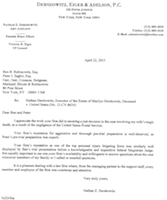 While nothing can bring my mother back, Ben's work enabled us to at least find comfort that those at fault were held accountable and for that, we will be forever grateful.
Rana Dershowitz
Rana Dershowitz’s father, Nathan Dershowitz, also sent a thank you letter to Ben. Click on the letter to read it.
Client Review
Ben Rubinowitz is a modern-day gladiator armed with the most potent weapons available on earth:
KNOWLEDGE – EXPERIENCE – COURAGE – PERSEVERANCE
Ben made us feel at ease while working tirelessly in the pursuit of our best interests. He guided us through each step in the process, presented the facts of the case (both favorable and unfavorable), opined on the probabilities of success at different settlement amounts, gave practical advice, and then took swift and definitive action once we had agreed on an approach. Like some of Ben’s cases, ours was settled out of court, thereby sparing all parties the stress and potential all-or-none outcome of a jury-based award.
During our settlement negotiations, Ben was relentless in overcoming each argument that the insurer’s team of attorneys threatened to use in court. Because of his intimate knowledge of medical procedures, the legal system, and other specialized expertise gained through years of in-court experience, Ben was able to convince both us and the insurer’s team of attorneys how compelling a case he would be able to make to a jury. The insurer settled privately for an amount that far exceeded our expectations. Put simply:
INJURED PARTY + BEN RUBINOWITZ = INSURER’S WORST NIGHTMARE
We are delighted to give Ben Rubinowitz our highest and unqualified recommendation, and we say to any prospective client, “You couldn’t be in better hands; Ben is the BEST, bar none.”
D. Feller and W. Stratigos
The following reviews are from Avvo:
Client Review
A considerate, hard working, very smart attorney. Ben worked extremely hard on my case and ultimately was very successful. I consider him a friend and heartily recommend him to anyone in need of his services.
Client Review
If anyone has any doubts about Ben, don't. If Ben takes your case, consider yourself lucky. You will have one of the smartest, most legally savvy attorneys in the medical malpractice universe. Ben worked tirelessly preparing for my case, and came to trial with a flawless medical understanding, documented with beautifully illustrated posters. More importantly, he came prepared with a watertight legal strategy, yet he remained flexible, quick witted, and fast enough on his feet to switch strategies mid-trial due to changing circumstances. His remarkable memory enabled him to shred the other attorneys every turn, and he was clearly better prepared than the entire opposing legal team. He made their start witnesses (doctors) look incompetent, and punched holes in their testimony. But what made Ben really effective was his genius at handling the jury. Towards the end of the weeklong trial the judge called me into his chamber and begged me to settle with the insurance company, so afraid he was that we were going to end up with nothing. He told me that he was convinced the jury was not on my side. But the judge was dead wrong - the jury gave me an award that broke NY State records. And just as important, Ben did a fantastic job in post-trial negotiations when the insurance companies once again tried to play hardball with us. It took another long hard day of negotiations, but Ben didn't cave, and ended up with a wonderful package. One more thing...Ben became like a brother to me and a step dad to my children, a true friend who is there when we need him, a friend I hope to have the rest of my life. I will never be able to thank him enough for what he has done for me and my family.
(Christopher Jones, client).
Client Review
The results speak for themselves, yet the means of attaining the results define Mr. Rubinowitz's approach to achieving a way to justifiably find closure to moving on in life with dignity, through equitable assessment and representation of the case in a court of law. His attention to detail and preparation carry and present the needs of the client. Aiding and empowering with an insight of what can be accomplished through the legal system. Instead of being viewed as a detail in a portion of the case, the client is presented with the best opportunity as the focus of the case. Mr. Rubinowitz's abilities in the courtroom represent and reflect years of experience providing the most reasonable, and realistic of results. When one's own life has sustained irreparable damage and decreased quality of life and your case is placed under scrutiny before the eyes of the law the best representation is the best defense. Mr. Rubinowitz's representation in defense is what made a difference in depth of scope of my case being evaluated before my peers "beyond a reasonable doubt in my favor". Thus attaining justified compensation and the best possible solution to what has been personally lost beyond restoration.
(Gloria Aguilar, client)
Client Review
Ben has a fine sense of case dynamics and led me to a settlement beyond what I had expected. He is a pleasure to work with.
Peer Endorsement
I had the great pleasure of attending a two-week national trial advocacy seminar hosted and planned by Mr. Rubinowitz. I found him to be a truly exceptional trial advocate, and one of the finest cross examiners I have ever seen. I practice in San Francisco and teach trial advocacy at Berkeley Law, and am proud to say that my students know Mr. Rubinowitz by name given how often I teach them the very same advocacy methods and skills he shared with me. I wholeheartedly endorse him for handling personal injury and wrongful death matters - if you want the best, call Mr. Rubinowitz.
S.P., San Francisco, CA.
Peer Endorsement
I strongly endorse this lawyer. I am a fellow trial lawyer and have worked with Ben for over 15 years on numerous matters. He is a great trial lawyer. He is meticulous in his preparation of cases and his courtroom skills are unmatched. Ben is smart, thought, and always well-prepared. These skills show themselves in the courtroom, at mediations, or anytime he is advocating on behalf of his clients. The proof of his abilities is shown by the phenomenal results that he consistently achieves for his clients. He is highly respected by judges and feared by many defense attorneys. Ben is also a well-respected teacher and writer on topic of Trial Advocacy. Also, I know many members of the trial bar, including myself, seek out Ben's counsel on how to handle their personal injury and medical malpractice cases. He is always accessible and has an uncanny ability to quickly and correctly analyze a case. Simply stated, Ben is one of the finest trial lawyers I know.
D.L., N.Y., N.Y
Peer Endorsement
I have had the privilege of working with Ben Rubinowitz for over 25 years. I have been honored to have taught trial advocacy all of the country as well in foreign countries. As a result, I have met and taught with some of the finest lawyers in the world. Ben Rubinowitz is one of the finest attorneys that I have had the chance to work with. His skills and reputation are second to none and I recommend him and endorse him to anyone who is looking for a top-flight trial lawyer.
J.G., Miami, FL
- In $182M Settlement By Metro-North Railroad, Plaintiffs' Counsel Focuses Arguments on Train Operator's Failure to Slow, Unique Third Rail
Ben Rubinowitz and the art of argument - "Do it for them": for Ben Rubinowitz, the client comes first
- Metro-North primarily responsible for fiery 2015 Valhalla crash that killed 6, jury finds
- MTA found mostly responsible for Metro-North wreck that killed 6 after SUV drove onto tracks: lawyer
- Stroke treatment delay leads to biggest ever malpractice verdict in Westchester
- $120M Medical Malpractice Verdict Said To Be Westchester's Larget
- Jury awards $120M to Elmsford man in medical malpractice suit against Westchester Medical Center
- First Department Appeals Court Halves Jury's 60M Pain and Suffering Award - But It's Still a Record
- NY's High Court Widens Path for Emotional Distress Claim for Family Members Who Lost 2-Year-Old to Falling Debris
- Rolling Stones: Two Men, Including Anthony Rapp, Sue Kevin Spacey for Alleged Sexual Assault
- Forbes: Lawsuit Accuses Kevin Spacey Of Sexual Misconduct Against Teenagers In 1980s
- USA Today Kevin Spacey accused in new lawsuit of assaulting two men when they were in their teens
- NY Daily News: ‘He is a pedophile who sexually abused children’ — disgraced ‘House of Cards’ actor Kevin Spacey sued for alleged 1980s sex assaults
- Jury's $60M Verdict in 'Agonizing' High School Student Burn Case Upheld
- NYC loses bid to reduce $60M payout to burned Beacon High School student
- Jayson Greene, Whose 2-Year-Old Greta Was Fatally Struck by Brick in New York, Speaks on Erica Tishman Death
New York Times: Kevin Spacey Accused of Sex Offenses Against Teenagers in New Lawsuit
Manhattan Jury awards $59.2M to a student set on fire during botched chemistry experiment.
Keeping children safe in school must be a priority. No longer can we permit schools to take shortcuts when it comes to the safety of our children. Managing partner Ben Rubinowitz obtained a $60 million verdict for a child severely burned in a botched chemistry experiment.
Read more in:
- The New York Times: $60 Million Awarded to N.Y. Student Engulfed in Flames in Chemistry Accident
- The New York Post: Beacon HS student burned in botched chemistry experiment awarded nearly $60M
- AP News: Jury awards nearly $60 million to ex-student burned in class
 $27.5 million record setting sexual abuse settlement against the catholic church.
Read articles in:
- the New York Times: Brooklyn Diocese Is Part of $27.5 Million Settlement in 4 Sex Abuse Cases
- the New York Law Journal: Catholic Diocese of Brooklyn Agrees to Record $27.5M Settlement With Sex Abuse Victims
- the New York Daily News: Diocese of Brooklyn agrees to historic $27.5 million settlement for church staffer's sexual abuse of 4 boys
Lawsuit claims cryotherapy chamber destroyed this New York woman's body leaving her in need of skin grafts. Click here to read the article.
Cryotherapy chamber destroyed my body: suit. Click here to read the article.
$41.5 million Verdict for the widow of a city worker killed by a street sweeper. Read articles in the Daily Mail, The New York Post, The New York Daily News and The New York Law Journal.
Record Setting $71 million Verdict for a former Cornell University Student who suffered spinal injury in a NY car crash. Read articles in New York Law Journal, New York Post, NY Daily News.
Major Settlement in Joan Rivers case reported in the New York Times. Click here to read the article.
Ben Rubinowitz obtained a $8,500,000 settlement for a man injured in an auto accident due to defective lane closure. Read more here.
Ben Rubinowitz obtained a $4.8 million settlement for the family of a victim of a NYC truck accident. On March 9 2011, around noon, Albert DeFilippo was riding in a “Lifestyle for the Disabled” van in Staten Island when the vehicle was struck by a FDNY truck. He suffered severe spinal injuries that paralyzed him. He also suffered ankle, rib and pelvic fractures as well as liver laceration that kept him confined to bed with extreme pain. He died from his injuries 5 months later. (see article in silive).
Ben Rubinowitz and Peter Sagir represented the family of Marilyn Dershowitz, a retired Manhattan Supreme Court special referee who died in a bicycle accident during which she was hit by a postal tractor trailer truck. Following a two-week bench trial in February U.S. Magistrate Judge Sarah Netburn found the federal government 100% liable for the fatal accident in a 72 page Opinion. Read more here
In 2013, Ben was named “LAWYER OF THE YEAR” for the New York City Metropolitan area by Best Lawyers in America. This award was given to Ben for his hard work and dedication in representing plaintiffs – those injured through the negligence and recklessness of others.
Yolanda Medina, a young mother of 3 children, offered to donate a kidney to her brother who was in need of a kidney transplant to save his life. The surgery to harvest her kidney was performed at a major metropolitan hospital in New York City. As a result of medical negligence, Yolanda Medina died during the procedure to harvest her kidney and her brother never received her kidney. Needless to say, the Medina family has been devastated by this Medical Malpractice.
The New York State Bar Association held its annual program on Construction Site Accidents. Based on his expertise In the area and for the fourth year in a row Ben Rubinowitz was asked to Chair the program. In the press release for the program Mr. Rubinowitz said, "I am honored that the State Bar Association has seen fit to ask me to chair the program for the last 4 years. Representing victims of Construction, Crane, Ladder and Scaffold accident is a task which our law firm handles with expertise. Our results speak for themselves. We have obtained some of the largest monetary awards in the state for our clients."
BBR Featured at MLMIC Risk Management Seminar In AlbanyIn recognition of his skill in handling medical malpractice cases Ben Rubinowitz was asked to be a featured speaker at the 25th Annual MLMIC Risk Management Seminar held in Albany, New York. Ben was asked to speak as an advocate for the patient. Ben spoke to more than 125 Risk managers and doctors about common themes in hospital liability cases and how he has handled the high exposure cases.
"I consider it an honor to be asked to lecture to the very people who are often my adversaries," said Ben "and I like to think that we were asked to participate in this seminar based on the extraordinary results we achieve on behalf of our clients." Joining Ben as speakers at the seminar were Dr. Kathy N. Shaw, the Chair of Pediatric Emergency Medicine at the Children's Hospital of Pennsylvania, Fay Rozovsky of the Rozovsky Group and Nancy E. May Skinner, Esq. of Fager & Amsler.
In November, 2011, Cardozo Law School held a seminar on Opening Statements for more than 100 students as a prerequisite to its Intensive Trial Advocacy Program. Featured Speakers at the lecture included Ben Rubinowitz and Judith Livingston. Prof. Ellen Yaroshefsky introduced each of these speakers as "two of the very best trial attorneys in the Country." She went on to say that "each of the speakers is viewed as a 'Lawyer's Lawyer by practicing members of the Trial Bar. Yaroshefsky said "when a lawyer is in need of help these are the lawyers they turn to."
Ben Rubinowitz gave a lecture and demonstration on opening statements in a civil trial focusing on appropriate representation of inliiduals who have been severely injured through the fault of others in car accidents, products liability and medical malpractice cases.
Ben Rubinowitz to Participate in Discussion of Medical Malpractice Cases in New York Supreme Court.
This program sponsored by The Association of The Bar of the City of New York. The program focused on various aspects of litigating medical malpractice cases, with attention to pitfalls of practice and other insights, all as viewed from the perspective of an experienced trial judge and two seasoned practitioners. The distinguished panel consisted of The Honorable Douglas E. McKeon, J.S.C. and two members of the medical malpractice bar, Ben B. Rubinowitz, Esq., Gair, Gair, Conason, Rubinowitz, Bloom, Hershenhorn, Steigman & Mackauf, and Glenn W. Dopf., Kopff, Nardelli & Dopf, LLP. Justice McKeon served as speaker and moderator.
Read more articles about Ben Rubinowitz.
In May and June 2013 Ben chaired the prestigious MASTERS PROGRAM sponsored by the New York State Trial Lawyers Institute. This is a program where the most experienced Trial Lawyers who have obtained the highest awards for their clients delivered actual demonstrations of openings and summations in cases they tried and showed how they overcame problems unique to the case to secure successful results on behalf of the injured plaintiffs.
Ben Rubinowitz has, for more than 29 years, lectured to lawyers to help them learn their craft. "I consider it a privilege to be asked to teach younger, less experienced lawyers who want to learn. Hopefully, this teaching has served our legal community well and has provided ethical and strategic insight for trial attorneys to assist them in representing their clients and in obtaining successful results for them.”
In 2013 Ben Chaired prestigious “Masters of Trial Advocacy” Program sponsored by the New York State Trial Lawyers Institute. He has also been asked to speak at the upcoming National Urologic Conference on Medical Malpractice.
For the past 30 years Ben has volunteered his time teaching Trial Advocacy skills to law students and practicing lawyers. Often, Ben has demonstrated these techniques from his most recent trials to his students. Many of these lectures and demonstrations have been digitally recorded and are available through Continuing Legal Education (C.L.E.) providers including the New York State Trial Lawyers Association, Practicing Law Institute, New York State Bar Association, American Association of Justice and the National Institute for Trial Advocacy. Below is a sample of actual in-court argument and trial demonstrations.
This video features a courtroom demonstration by Ben Rubinowitz showcasing the opening statement delivered in the catastrophic injury case of Alonso Yanes, which resulted in a $60 million jury verdict. In this presentation, he breaks down how a carefully structured and disciplined opening can establish accountability, frame devastating injuries with clarity, and set the tone for a high-stakes trial. The demonstration reflects the level of preparation, credibility, and persuasive advocacy that has defined his trial practice in some of the most serious injury cases in New York.
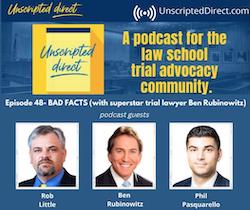 Ben recently demonstrated how to use "Voice of Reason" questions when cross examining a witness in almost any type of negligence case in "Unscripted Direct, Episode 48", a podcast aimed at the law school trial advocacy community (Ben segment starts at 00:17:50)
The following video is a demonstration of an opening statement in a wrongful death case. The plaintiff was represented at trial by our managing partner New York Personal Injury Lawyer Ben Rubinowitz. The case involved the death of a little girl who was a passenger in a car being driven by her father. She was killed as a result of the combined negligence of a truck driver and the carelessness of the City of New York. The case was significant in that the little girl’s father was in the”zone of danger” when he witnessed the death of his daughter. The jury returned a substantial multi-million dollar verdict in the case finding both the truck driver and the City at fault.
In this video Ben Rubinowitz demonstrates a summation from a case he tried with two of his colleagues, Michael Dowd and Paul Mones. The case involved the sexual abuse of two teenagers by their Youth Minister. The case received national press coverage and was reported in the media throughout every day of the trial. The case was brought under various legal theories which included 1: the failure of the defendant to provide proper supervision to the children it was supposed to protect, 2: inadequate, negligent and reckless hiring of a youth minister and 3: negligent and reckless retention of that youth minister. The children that were sexually abused by their youth minister suffered, among other injuries, Post Traumatic Stress Disorder.
In this video Ben Rubinowitz demonstrates his summation in the Aguilar case -- a case that resulted in the largest verdict in the country for a woman who suffered the loss of her leg. This woman, who was walking home, was struck by a careless Bus Driver. The New York City Transit Authority claimed that the woman was at fault for the happening of this accident and that she caused her own injuries; however, the jurors disagreed. After summation, the jury returned a $27,500,000 verdict.
In this video Ben Rubinowitz lectures about the importance of knowing the law in the State in which he practices and explains why it is, at times, better to make a motion prior to the start of the case for a unified trial in order to show the jury that the injuries are inextricably bound with liability. In this video Ben presents an opening statement in which his client was struck by a car and suffered a severe knee injury.
This video is the actual argument presented by Ben Rubinowitz at the New York Court of Appeals -- the highest level Appellate Court in New York. Ben successfully argued this case on behalf of his client -- a young woman rendered blind by a Drunk Driver -- and won a 7-0 decision in favor of his client. "I was extremely pleased that every one of the Judges on the Court of Appeals agreed with my argument" said Rubinowitz , "but I was even more pleased that I was able to secure a Ten Million Dollar award for my client who was so badly injured by this drunk driver."